
For many international students, studying abroad represents a life changing opportunity. It offers access to better education, global exposure, career growth, and the chance to build a brighter future. However, one major obstacle discourages many students from applying for international scholarships.
That obstacle is IELTS.
Many students feel anxious about English language examinations because of the cost, preparation pressure, limited test centres, or fear of low scores. Others simply cannot afford the exam fees alongside other application expenses.
Because of this, thousands of students assume studying abroad is impossible without IELTS.
This belief causes many talented students to abandon scholarship opportunities before even researching their options properly.
The truth is that several universities, scholarship programmes, and countries now offer opportunities for international students without requiring IELTS specifically.
Some institutions accept alternative forms of English proficiency proof. Others waive English tests completely under certain conditions.
However, many students still struggle because they do not understand:
- Which countries accept applications without IELTS
- How to identify legitimate opportunities
- What alternative documents are accepted
- How to prepare strong applications
- How to avoid common scholarship mistakes
This guide explains how to apply for scholarships without IELTS, the countries and universities that may accept alternatives, how to strengthen your application, and practical strategies that improve your chances of success.
Why Many Students Want Scholarships Without IELTS
The IELTS examination can become a major challenge for international students for several reasons.
The first issue is cost.
In many countries, IELTS registration fees are expensive compared to average income levels. Students already struggling financially may find it difficult to pay for examinations, passport processing, application fees, and document preparation simultaneously.
Another issue is accessibility.
Some students live in areas with limited test centres, making registration and travel difficult.
Fear and pressure also contribute significantly.
Many students worry about achieving the required score, especially if English is not their first language.
Because scholarship opportunities are highly competitive, students often fear that one poor IELTS result could destroy their chances completely.
These challenges explain why so many students actively search for scholarship opportunities without IELTS requirements.
Is It Really Possible to Study Abroad Without IELTS?
Yes, it is possible.
However, students need to understand that “without IELTS” does not always mean “without proving English ability entirely.”
Many universities still want evidence that international students can understand and communicate effectively in English.
The difference is that some institutions accept alternative methods of proving English proficiency instead of IELTS specifically.
This may include:
- Previous education conducted in English
- Alternative English tests
- University interviews
- English proficiency letters
- Internal language assessments
Some universities and scholarship programmes also waive language requirements completely under specific conditions.
Understanding this helps students approach opportunities more realistically.
Countries That Commonly Accept Alternatives to IELTS
Several countries now provide opportunities for international students to apply without IELTS under certain conditions.
Canada has institutions that sometimes accept alternative proof of English proficiency, especially if previous education was completed in English.
Germany also offers opportunities for international students through universities that may accept alternative language proof depending on the programme.
United Kingdom has universities that sometimes waive IELTS requirements for students meeting specific educational conditions.
Australia and United States may also offer pathways where alternative English verification methods are accepted.
In addition, countries such as Turkey, China, and Malaysia increasingly attract international students through scholarship programmes with flexible language requirements.
Requirements vary between institutions, so careful research is extremely important.
Alternative English Proficiency Proof Accepted by Universities
Many universities accepting applications without IELTS usually request alternative evidence of English ability.
One common alternative is a Medium of Instruction letter, often called an MOI letter.
This document confirms that your previous education was conducted in English.
For example, if your secondary school or university taught courses in English, some universities may accept an official letter proving this instead of IELTS.
Another alternative includes other English tests such as TOEFL, Duolingo English Test, PTE, or Cambridge English assessments.
Some universities also conduct online interviews to evaluate communication ability directly.
Others may assess English skills through internal examinations after admission.
Understanding these alternatives increases your opportunities significantly.
How to Search for Scholarships Without IELTS
One reason many students struggle is because they search too broadly without proper strategy.
Instead of searching general scholarship phrases randomly, focus on more targeted searches connected to:
- Scholarships without IELTS
- Universities accepting MOI letters
- Alternative English proficiency scholarships
- International student scholarships with language waivers
Official university websites are usually the most reliable source of information.
Scholarship requirements can change yearly, so always verify details directly from official sources instead of relying completely on social media posts.
Researching carefully helps avoid misinformation and scams.
Understanding Fully Funded Scholarships
Many students searching for scholarships without IELTS are also interested in fully funded opportunities.
A fully funded scholarship generally covers major educational expenses such as:
- Tuition fees
- Accommodation
- Living expenses
- Health insurance
- Travel support
However, coverage varies depending on the programme.
Some scholarships cover everything completely, while others provide partial financial support.
Understanding the scholarship structure helps students prepare financially and avoid unrealistic expectations.
Preparing a Strong Scholarship Application
One of the biggest mistakes students make is focusing only on IELTS waivers while neglecting the overall quality of their application.
Scholarship committees evaluate many factors beyond language tests.
Strong applications usually include:
- Good academic performance
- Clear personal statements
- Strong motivation
- Leadership qualities
- Community involvement
- Relevant achievements
Your application should demonstrate why you deserve the opportunity and how the scholarship aligns with your goals.
Scholarship reviewers often receive thousands of applications, so presentation matters greatly.
How to Write a Strong Personal Statement
A personal statement is one of the most important parts of many scholarship applications.

Unfortunately, many students write generic essays that fail to stand out.
A strong personal statement should explain:
- Your educational goals
- Your background
- Challenges you have overcome
- Why you chose the programme
- Your future ambitions
- How the scholarship will impact your life
Avoid copying templates directly from the internet.
Authenticity creates stronger emotional connection and credibility.
Your story does not need to sound perfect. It simply needs to sound genuine and purposeful.
Importance of Academic Performance
Although some scholarships are flexible, academic performance still matters significantly.
Good grades demonstrate discipline, commitment, and learning ability.
Students with weaker academic backgrounds should focus on strengthening other parts of their applications such as:
- Leadership activities
- Volunteer work
- Certifications
- Personal achievements
- Strong essays
Scholarship selection is often holistic rather than based on one factor alone.
Common Mistakes Students Make When Applying
One major mistake students make is waiting too long before applying.
Many scholarships have strict deadlines and limited spaces.
Another common issue is submitting incomplete applications.
Missing documents, incorrect formatting, or careless mistakes reduce credibility quickly.
Some students also apply for scholarships they do not qualify for without reading requirements properly.
Another mistake is copying personal statements from online sources.
Scholarship committees often recognise plagiarism and generic writing easily.
Careful preparation increases your chances significantly.
How to Avoid Scholarship Scams
Unfortunately, many fake scholarship offers exist online.
Scammers often target students desperate for international opportunities.
One warning sign is when organisations demand large upfront payments for guaranteed scholarships.
Legitimate scholarships usually do not require suspicious processing fees for selection.
Another warning sign is unrealistic promises such as guaranteed admission without proper procedures.
Always verify scholarship information through official university or government websites.
Research protects you from financial loss and disappointment.
Why Research Matters More Than Most Students Realise
Students often become overwhelmed because of too much information online.
This leads many people to follow random advice without verifying accuracy.
Proper research helps you:
- Understand eligibility requirements
- Identify realistic opportunities
- Prepare correct documents
- Avoid misinformation
- Improve application quality
Successful scholarship applications often depend on careful attention to detail.
Patience and organisation matter greatly throughout the process.
Building a Strong Student Profile
Scholarships are highly competitive.
This means students should focus on becoming stronger candidates overall.
Building a strong profile involves more than grades alone.
Leadership activities, volunteering, internships, online learning, certifications, and community involvement all strengthen scholarship applications.
Students who demonstrate initiative and ambition often stand out more effectively.
Small improvements create long term advantages.
How Students Can Improve Their English Without IELTS
Even when IELTS is not required, improving English communication skills remains extremely important.
International education environments usually involve English communication daily.
Students can improve gradually through:
- Reading English materials
- Watching educational videos
- Practising writing regularly
- Speaking consistently
- Taking free online English courses
Improved communication also helps during interviews and application writing.
The Role of Interviews in Scholarship Applications
Some universities and scholarship programmes conduct interviews instead of relying only on IELTS scores.
These interviews help institutions evaluate communication ability, confidence, motivation, and personality.
Preparation is important.
Students should practise speaking clearly and confidently about:
- Their goals
- Academic interests
- Future plans
- Reasons for choosing the programme
You do not need perfect English to communicate effectively.
Clarity, confidence, and sincerity matter greatly.
Step By Step Guide to Applying for Scholarships Without IELTS
If you are serious about studying abroad without IELTS, following a structured process can make the application journey easier and more effective. Many students become overwhelmed because they try to handle everything at once without a clear plan.
Breaking the process into smaller practical steps helps reduce confusion and improves your chances of success.

Step 1: Research Countries and Universities That Accept Alternatives to IELTS
The first step is identifying universities and scholarship programmes that accept alternative English proficiency proof.
Some institutions accept:
- Medium of Instruction letters
- Duolingo English Test
- Previous education completed in English
- Internal university assessments
- Online interviews
Focus on official university websites to confirm requirements instead of relying only on social media information.
Countries such as Canada, Germany, Turkey, and United Kingdom often have universities with flexible language requirements depending on the programme.
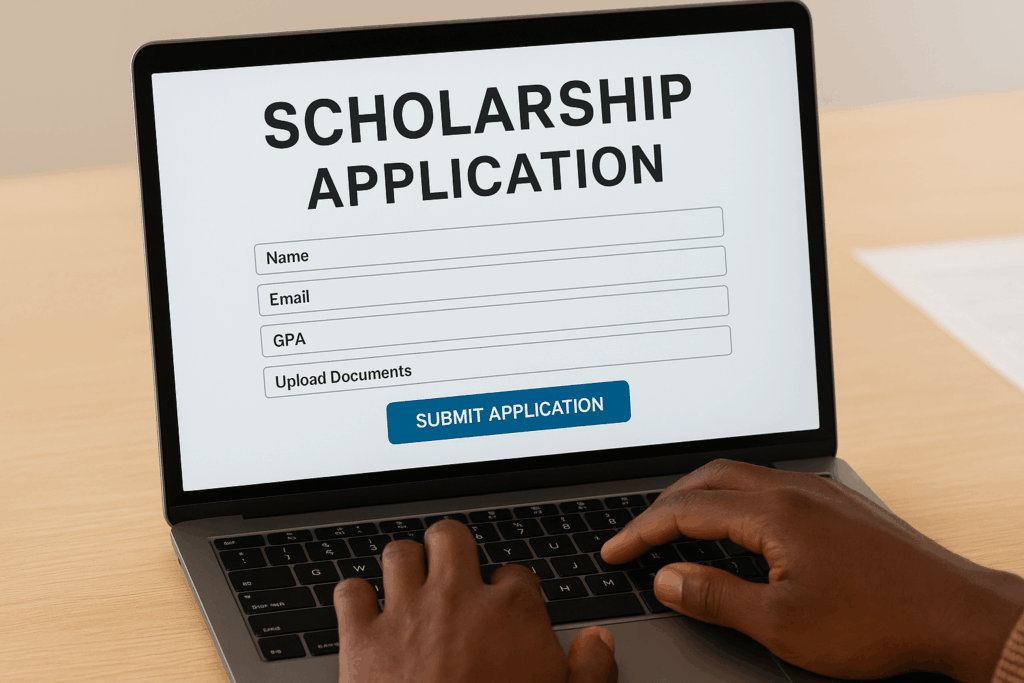
Step 2: Prepare Your Academic Documents Early
Many students delay document preparation until deadlines become very close, which creates unnecessary stress.
Prepare important documents early, including:
- Academic transcripts
- Certificates
- International passport
- Recommendation letters
- Personal statement
- Curriculum Vitae or resume
Having your documents organised helps you apply faster and more confidently when opportunities appear.
Step 3: Request a Medium of Instruction Letter
If your previous education was conducted in English, contact your school and request a Medium of Instruction letter, often called an MOI letter.
This document officially confirms that English was the language used during your studies.
Many universities accept this as an alternative to IELTS for international students.
Ensure the letter is signed, stamped, and properly formatted by your institution.
Step 4: Create a Strong Personal Statement
Your personal statement is one of the most important parts of your scholarship application.
Instead of writing generic essays, focus on telling your real story.
Explain:
- Your educational goals
- Why you want to study abroad
- Challenges you have overcome
- Your future ambitions
- How the scholarship will help your career and personal growth
Authentic and well structured personal statements usually create stronger impressions than copied templates.
Step 5: Apply to Multiple Scholarships Strategically
One common mistake students make is depending on only one scholarship application.
Scholarships are highly competitive, so applying to multiple suitable opportunities increases your chances significantly.
Focus on scholarships that genuinely match your qualifications and academic goals instead of applying randomly everywhere.
Quality applications are more effective than rushed applications.
Step 6: Prepare for Scholarship Interviews
Some universities and scholarship programmes may invite applicants for interviews instead of relying only on IELTS scores.
These interviews help institutions evaluate communication skills, confidence, and motivation.
Practise answering common questions such as:
- Why do you want this scholarship?
- Why did you choose this programme?
- What are your future goals?
- Why should you be selected?
Clear and confident communication matters more than speaking perfect English.
Step 7: Stay Organised Throughout the Process
Applying for scholarships involves managing several deadlines, documents, and application portals.
Creating a checklist or spreadsheet can help you track:
- Scholarship deadlines
- Submitted applications
- Required documents
- Interview dates
- University responses
Organisation reduces mistakes and helps you stay focused throughout the process.
Step 8: Remain Patient and Consistent
Scholarship applications often take time.
Some universities respond quickly, while others may take several weeks or months.
Do not become discouraged if you face rejection initially.
Many successful international students were rejected multiple times before finally receiving scholarship opportunities.
Consistency, preparation, and continuous improvement usually increase your chances over time.
How Students Can Stay Organised During Applications
Applying for scholarships involves managing multiple documents, deadlines, and requirements.
Organisation helps reduce stress and mistakes.
Create a checklist for:
- Passport documents
- Academic transcripts
- Recommendation letters
- Personal statements
- Application deadlines
- Language proof documents
Tracking everything properly improves efficiency and confidence.
Using Online Platforms to Build Skills and Experience
Some students feel insecure because they believe they lack experience or exposure.
Online learning platforms and digital work opportunities can help students build practical skills gradually.
Platforms like SproutGigs expose beginners to online work systems, communication, and task management environments.
Although not direct scholarship providers, such experiences can help students improve discipline, digital literacy, and confidence while preparing for international opportunities.
Building skills consistently strengthens long term educational and career goals.
Why Persistence Matters in Scholarship Applications
One reason many students fail is because they give up too quickly after one or two rejections.
Scholarship applications are competitive globally.
Even strong students sometimes face rejection.
Persistence matters greatly.
Each application teaches you something about improving essays, preparing documents, and presenting yourself more effectively.
Success often comes through consistent improvement over time.
Managing Expectations Realistically
Studying abroad without IELTS is possible, but students should remain realistic.
Not every university waives language requirements completely.
Requirements vary depending on countries, programmes, and institutions.
The goal should not be searching for shortcuts but understanding legitimate alternative pathways.
Preparation, research, and professionalism remain essential.
Conclusion
Learning how to apply for scholarships without IELTS opens opportunities for many international students who previously believed studying abroad was impossible.
Several universities and countries now accept alternative English proficiency proof, making international education more accessible under certain conditions.
However, success still depends on proper preparation, strong applications, careful research, and realistic expectations.
Students who focus on improving their profiles, writing authentic personal statements, understanding scholarship requirements, and applying strategically usually increase their chances significantly.
The process may feel overwhelming initially, but persistence and preparation create progress over time.
Instead of allowing fear of IELTS to stop your educational goals completely, focus on exploring legitimate alternatives and building stronger applications step by step.
Many international students studying abroad today once faced the same doubts and uncertainties before deciding to apply anyway.