

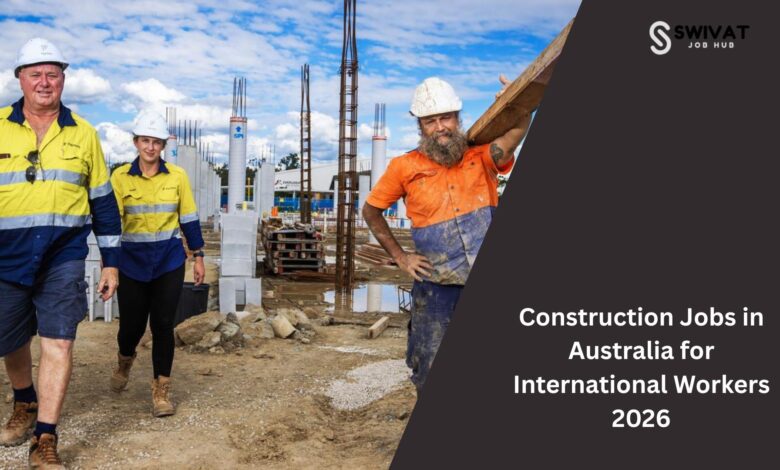
A lot of people searching for jobs abroad focus only on office work, remote jobs, or professional careers.
Meanwhile, one of the strongest industries hiring international workers in Australia is often overlooked.
Construction.
Across different cities and regions in Australia, construction companies continue searching for workers to support growing infrastructure and development projects.
Road construction, residential buildings, commercial properties, warehouses, and public projects all require large numbers of workers.
The problem is that labour demand has grown faster than the available workforce.
This is why many construction employers now look beyond local recruitment and hire international workers.
For foreigners willing to work hard, construction jobs in Australia can become realistic opportunities for stable income and long term career growth.
The important thing is understanding how the industry works and what employers are actually looking for.
Once you understand that, the process becomes much clearer.
Why Construction Jobs Are in High Demand in Australia
Australia continues investing heavily in infrastructure and development.
New housing projects, transport systems, commercial buildings, and industrial facilities are constantly being developed across the country.
These projects require workers for:
- building operations
- material handling
- site preparation
- structural support
- equipment operations
At the same time, the industry faces labour shortages because many employers struggle to recruit enough workers locally.
This has opened opportunities for international applicants willing to work in physically demanding environments.
What Construction Workers Actually Do
Construction work is broader than many people think.
Different roles exist depending on the type of project and employer.
Some workers assist with site preparation while others help with materials, equipment, or structural work.
Daily responsibilities may include:
- moving construction materials
- preparing work sites
- assisting skilled tradespeople
- operating basic tools
- supporting building projects
- maintaining safety standards
- cleaning work areas
Larger projects usually divide workers into specialised teams, making responsibilities easier to manage.
Types of Construction Jobs Available in Australia
The construction industry includes different categories of work.
Understanding these categories helps you apply more strategically.
General Construction Labourer Jobs
This is one of the most common entry level roles.
General labourers support construction teams with physical tasks such as:
- carrying materials
- preparing work areas
- assisting tradespeople
- handling basic site duties
Many international workers begin here.
Site Assistant Jobs
Site assistants help supervisors and skilled workers maintain efficient workflow on construction sites.
Responsibilities may include:
- organising materials
- monitoring supplies
- supporting daily operations
- helping maintain site cleanliness
Skilled Trade Support Jobs
Construction companies also hire workers to support:
- electricians
- plumbers
- carpenters
- welders
- concrete workers
These roles may provide opportunities to gain experience and specialised skills over time.
Road and Infrastructure Construction Jobs
Large infrastructure projects require workers for:
- road development
- bridge construction
- transport systems
- industrial projects
These projects often involve long term contracts.
Warehouse and Construction Supply Roles
Construction companies also need workers to manage:
- equipment storage
- supply inventory
- loading and unloading materials
- logistics support
These jobs combine warehouse and construction responsibilities.
Can Beginners Apply for Construction Jobs?
Yes, many construction roles accept beginners.
Not every position requires advanced experience or certifications.
Entry level employers often focus more on:
- physical fitness
- willingness to learn
- reliability
- teamwork
- ability to follow instructions
Some employers provide on site training after hiring.
However, physically demanding conditions mean workers must be prepared for active environments.
Why Australia Hires International Construction Workers
Construction projects cannot progress without enough workers.
When labour shortages increase, companies expand recruitment internationally.
International workers help employers:
- complete projects on time
- maintain productivity
- reduce labour gaps
- support infrastructure growth
This is why some employers also support visa sponsorship or skilled migration pathways depending on labour demand.
Salary Expectations for Construction Jobs in Australia
Construction jobs in Australia are often attractive because of stable wages and overtime opportunities.
Salary depends on:
- experience level
- project type
- location
- overtime availability
- skill category
Many construction workers receive:
- hourly wages
- overtime pay
- weekend bonuses
- shift allowances
Skilled workers usually earn higher salaries, but even entry level labourers can earn stable income compared to many industries.
What a Typical Workday Looks Like on Construction Sites
Construction work usually begins early in the morning.
Workers attend brief safety meetings before starting daily responsibilities.
Supervisors assign tasks depending on project needs.
Some workers move materials while others assist tradespeople or help prepare building areas.
Construction sites are active environments with constant movement and coordination between teams.
Safety rules are extremely important.
Workers are expected to wear protective equipment and follow instructions carefully.
Break periods are scheduled throughout the day depending on shift length and project schedules.
Skills Employers Look For in Construction Workers
Construction employers value practical qualities more than complicated qualifications.
Physical Stamina
Construction work can involve lifting, standing, climbing, and repetitive movement for long periods.
Physical readiness is essential.
Reliability
Construction projects follow strict schedules.
Employers value workers who show up consistently and follow instructions properly.
Teamwork
Construction projects depend heavily on coordination between workers and departments.
Good teamwork improves productivity.
Safety Awareness
Construction sites can be dangerous without proper safety procedures.
Employers prioritise workers who take safety seriously.
Step by Step Guide to Applying for Construction Jobs in Australia
Now let’s make this practical.
Step 1: Understand the Type of Construction Work You Want
Research different construction categories before applying.
This helps you target suitable roles more effectively.
Step 2: Prepare a Strong CV
Your CV should highlight:
- physical readiness
- reliability
- teamwork
- willingness to relocate
- any labour or technical experience
Even informal experience can still help.
Step 3: Target Employers Hiring International Workers
Focus on:
- construction companies
- labour hire agencies
- infrastructure contractors
- industrial project employers
Some companies are more open to international recruitment than others.
Step 4: Apply Consistently
Many applicants fail because they stop too early.
Construction recruitment often rewards persistence.
Applying regularly increases visibility and opportunities.
Step 5: Prepare for Interviews
Employers may ask:
- Are you comfortable with physical work?
- Can you work long shifts?
- Are you willing to relocate?
- Do you understand safety procedures?
Simple confident answers work best.
Step 6: Understand Visa and Work Requirements
Some construction jobs may involve:
- work visa processes
- sponsorship opportunities
- labour agreements
- migration pathways
Understanding immigration basics helps you prepare realistically.
Common Mistakes International Applicants Make
Many applicants reduce their chances by:
- using weak CVs
- applying randomly
- ignoring physical requirements
- expecting fast results
- giving up after rejection
Construction hiring often rewards serious and consistent applicants.
Challenges of Construction Work
Construction jobs provide strong opportunities, but they are demanding.
Workers may experience:
- physically exhausting tasks
- outdoor weather conditions
- early morning schedules
- long shifts
- repetitive labour
However, many workers still choose construction because of:
- stable income
- overtime opportunities
- international work experience
- career growth pathways
Why Construction Jobs Can Lead to Long Term Opportunities
Many workers start with entry level construction roles and later move into:
- specialised trades
- equipment operations
- site supervision
- technical construction careers
The industry offers long term development for workers willing to gain experience over time.
How to Increase Your Chances of Success
To improve your results:
- apply consistently
- stay flexible with location
- improve your CV gradually
- target labour shortage regions
- demonstrate reliability during interviews
Persistence matters more than many applicants realise.
Why Construction Jobs Are a Real Opportunity for Foreigners
Construction remains one of Australia’s strongest industries for practical workers.
The demand is real because infrastructure projects continue expanding across the country.
For international workers willing to handle physically active environments, construction jobs can become stable pathways toward financial growth and international work experience.
Why Many Foreigners Are Now Targeting Australia’s Construction Industry
Over the last few years, Australia’s construction sector has become one of the biggest opportunities for international workers looking for stable jobs abroad.
The reason is simple.
Australia is expanding rapidly.
New residential estates are being built constantly. Roads are being upgraded. Commercial buildings are increasing. Warehouses, transportation systems, and industrial facilities are growing across different parts of the country.
All of these projects require workers.
The challenge is that there are not enough local workers to meet the growing labour demand.
This shortage has created strong opportunities for foreigners willing to work in construction related roles.
For many international applicants, construction jobs are attractive because:
- they offer practical entry points into Australia
- some employers provide sponsorship support
- many roles do not require university degrees
- overtime opportunities can increase earnings significantly
Unlike some office jobs that require years of qualifications and certifications, many construction roles focus more on physical ability, reliability, and willingness to work.
That is why the sector continues attracting international applicants from different countries.
What Makes Construction Jobs Different From Other Industries
Construction work is very different from hospitality, warehouse, or office based jobs.
The environment is more physically active and project based.
Instead of sitting in one place all day, workers move around construction sites, operate equipment, assist teams, and help complete building projects.
The pace of work also changes depending on deadlines and project stages.
Some days may involve heavy labour while others focus more on preparation, organisation, or support tasks.
Construction work also tends to feel more practical and direct.
Workers can physically see the progress of projects they contribute to, which many people find satisfying.
Entry Level Construction Jobs Foreigners Can Apply For
Many people assume all construction jobs require advanced trade certifications.
That is not true.
There are several entry level positions suitable for foreigners without extensive experience.
General Site Labourer
This is one of the most common starting points.
Labourers support construction teams by:
- moving materials
- preparing work areas
- cleaning sites
- assisting skilled workers
- helping maintain workflow
The role is physically demanding but beginner friendly.
Demolition Support Worker
Some projects involve removing old structures before new construction begins.
Demolition support workers help:
- clear debris
- organise waste materials
- assist equipment operators
- prepare sites for rebuilding
Safety awareness is especially important here.
Scaffolding Assistant
Scaffolding teams help build temporary structures used during construction projects.
Assistants support workers by:
- handling materials
- organising tools
- helping with setup procedures
This role often provides opportunities to gain specialised skills later.
Construction Cleaning Roles
Large projects require workers to maintain site cleanliness and safety.
Construction cleaners help:
- remove waste
- organise materials
- maintain safe pathways
- prepare work areas for different teams
These jobs are less technical but still essential.
Traffic Control Support Roles
Road construction and infrastructure projects often require workers to help manage traffic around work areas.
Responsibilities may include:
- directing vehicles
- maintaining safety zones
- assisting road crews
Some regions require short certifications for these positions.
Why Employers Prefer Reliable Workers Over “Perfect” Workers
One of the biggest misconceptions foreigners have is believing construction companies only hire highly experienced workers.
In reality, many employers prefer workers who are:
- dependable
- physically capable
- willing to learn
- punctual
- consistent
Construction projects run on deadlines.
If workers fail to show up consistently, projects slow down and companies lose money.
That is why reliability matters so much.
A beginner who works hard and follows instructions properly can sometimes become more valuable than someone experienced but unreliable.
Understanding Construction Work Culture in Australia
Construction culture in Australia is usually fast paced and team oriented.
Workers are expected to:
- communicate clearly
- follow safety procedures
- respect supervisors
- work efficiently
- support team productivity
Australian construction sites also place strong emphasis on safety.
Protective equipment such as:
- helmets
- gloves
- reflective clothing
- steel toe boots
are standard requirements.
Supervisors take safety seriously because accidents can delay projects and create legal issues.
How Overtime Increases Construction Earnings
One reason many workers choose construction jobs is overtime opportunities.
Large projects often operate on tight schedules.
This means companies may offer:
- extended shifts
- weekend work
- night shifts
- project completion bonuses
For workers willing to handle longer hours, total earnings can increase significantly.
This is especially attractive for foreigners trying to save money or support families back home.
Regional Areas Often Have More Opportunities
One mistake many international applicants make is focusing only on major cities like Sydney or Melbourne.
While opportunities exist there, competition is also much higher.
Smaller cities and regional areas often struggle more with labour shortages.
Because of this, employers in those locations may:
- hire faster
- offer better opportunities
- be more open to sponsorship support
Applicants willing to relocate usually improve their chances significantly.
How Recruitment Agencies Help Foreign Workers
Many construction companies hire through labour hire agencies.
These agencies help connect workers with construction projects.
For foreigners, agencies can sometimes provide:
- temporary placements
- project based contracts
- job matching support
- onboarding guidance
Some agencies specialise specifically in labour shortage industries.
This is why many workers secure opportunities through recruitment channels rather than direct company applications alone.
Common Challenges International Workers Face
Construction jobs provide strong opportunities, but they are not easy.
Workers may face:
- physical exhaustion
- extreme weather conditions
- early morning schedules
- long commutes
- repetitive labour tasks
Adapting to construction culture can also take time for newcomers.
However, many workers accept these challenges because the industry provides:
- stable income
- career progression opportunities
- overtime earnings
- long term employment potential
Career Growth Opportunities in Construction
Construction is not always a “dead end” labour job like some people assume.
Many workers gradually progress into higher paying positions over time.
After gaining experience, workers may move into:
- equipment operation
- specialised trades
- welding
- carpentry
- plumbing assistance
- site supervision
- project coordination
The industry rewards practical experience heavily.
Workers who stay committed often create long term career paths.
Why Some Foreign Applicants Get Rejected
Many applicants reduce their own chances because they:
- use poor CVs
- apply randomly
- ignore physical requirements
- underestimate the work environment
- fail to prepare for interviews
Construction employers look for seriousness.
Applications that clearly demonstrate readiness and reliability stand out more.
How to Make Your Application Stronger
To improve your chances:
- keep your CV simple and practical
- highlight any labour experience
- show willingness to relocate
- mention physical readiness
- apply consistently to multiple employers
Construction hiring often rewards persistence more than perfection.
Conclusion
Construction jobs in Australia for international workers in 2026 remain strong opportunities for foreigners looking for stable work abroad.
The industry continues needing workers because infrastructure development keeps growing while labour shortages remain active.
Success depends on:
- understanding the industry
- applying strategically
- staying consistent
- preparing realistic expectations
For many international workers, construction becomes more than just temporary employment.
It becomes the beginning of a long term career path and a more stable future in Australia.